
Create a Wallet
Learn what an address, seed phrase and private key represent before creating or importing a wallet.
Start here →imtoken multi-chain digital wallet
A multi-chain wallet, blockchain network and Web3 knowledge hub from imtoken
Use imtoken to understand the practical path from viewing multi-chain assets to choosing the correct network, receiving and sending assets, connecting to DApps, reviewing signatures and approvals, and checking transaction status. The surrounding guides explain why network selection matters and how to keep wallet secrets, permissions and transaction details under your control.
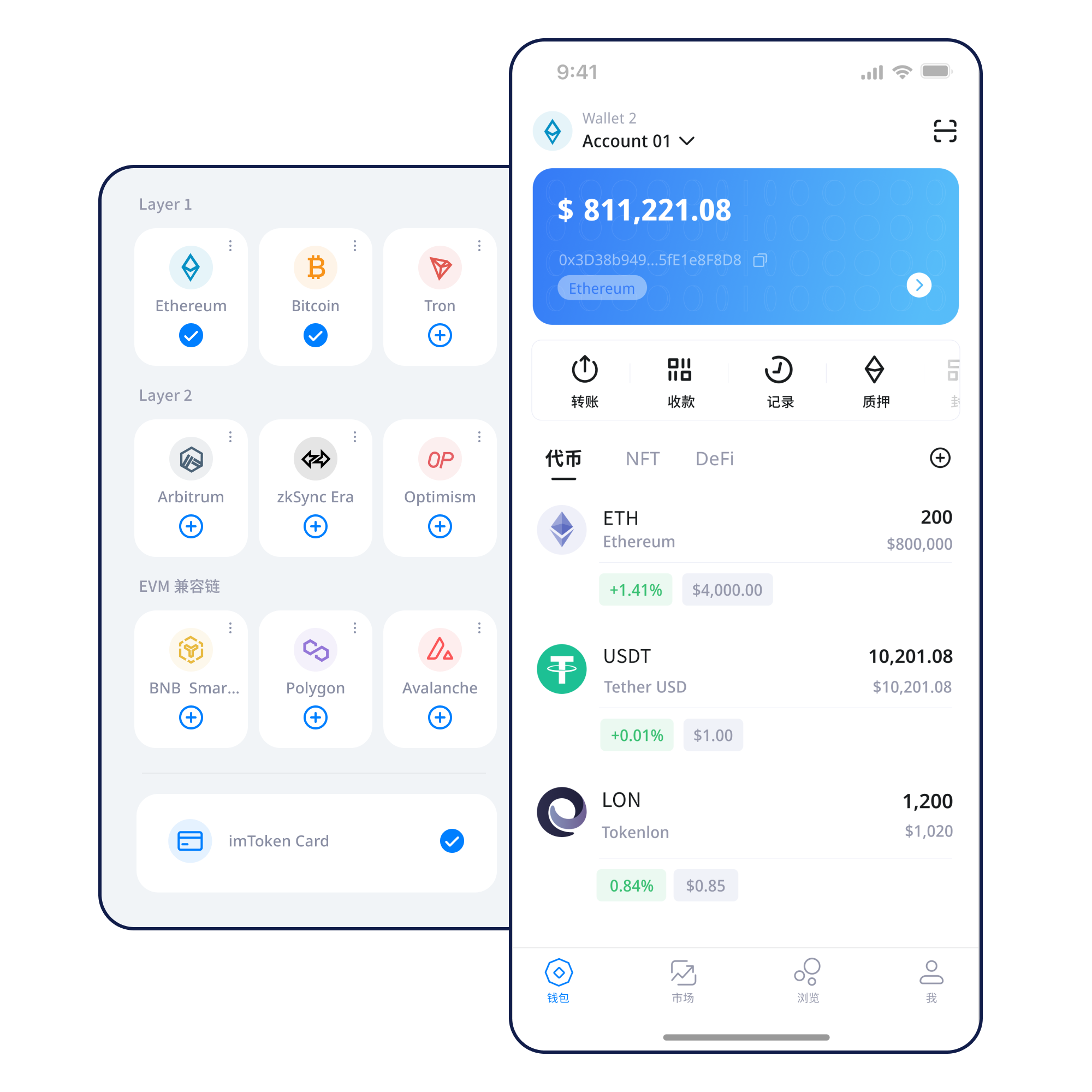
Learn what an address, seed phrase and private key represent before creating or importing a wallet.
Start here →Keep recovery material offline, private and readable so it is not exposed through screenshots or shared storage.
Backup guide →Confirm the destination network before sharing an address; matching asset names do not guarantee network compatibility.
Receiving checks →Review the destination address, network, amount and network fee before approving a transfer.
Transfer checks →Verify the domain and account request, then inspect every signature and token approval as a separate decision.
Connection guide →Wallet capabilities
Wallet tasks are easier to reason about when the network, account, transaction and permission are treated as separate pieces of information.
Keep assets from different networks distinct. Confirm the selected network, verify the receiving address and interpret transaction status in the context of that network.
Use the mobile wallet to inspect assets, manage network choices, review transaction records and evaluate DApp requests before acting.
For receiving, match the address with the intended network. For sending, check the amount and gas, then use the transaction hash to follow confirmation progress.
Browser-based Web3 activity requires attention to the site domain, connection scope, signatures, approvals and the point at which a session should be disconnected.
Your seed phrase and private key are your responsibility to protect. imtoken personnel will not ask for them or for a verification code.
Blockchain networks
Public chains, EVM networks, Layer 2 systems and gas each describe a different part of how transactions are executed and confirmed.
Assets, fees and transaction state belong to a specific network. Similar address formats do not make assets automatically portable between chains.
Continue reading →
Nodes propagate transactions, blocks record state changes, and confirmations help users understand how far a transaction has progressed.
Continue reading →
EVM-compatible networks can share familiar address and contract concepts while maintaining independent gas assets, contracts and state.
Continue reading →
Layer 2 systems process activity with a defined relationship to a base layer. Moving assets across layers may require a bridge and separate confirmation stages.
Continue reading →
Gas pays for network execution. A submitted transaction receives a hash, and later confirmations provide evidence that the network has incorporated it into chain history.
Continue reading →Using your wallet
Each step carries a specific security decision. Avoid treating setup, transfer and DApp permissions as one undifferentiated action.
Use the download entry on this site and review what you are opening before proceeding.
Understand which information is public and which recovery material must remain private.
Keep the seed phrase offline and never disclose a private key to another person or service.
Match the network to the intended asset route and check address compatibility before a transfer.
Before sending, verify the address, network, amount and fee. Consider a small test when the situation warrants it.
Check transaction hashes, inspect DApp signing requests and periodically remove approvals that are no longer needed.
Web3 & DApps
Connecting a wallet can expose an account to a DApp interface, but it does not mean every later signature or approval should be accepted. Treat each request as a separate action with its own domain, account, contract, amount and permission context.
Explore the Web3 guide →Security
A wallet cannot reverse ordinary on-chain transactions on its own. That makes preparation important: store seed phrases and private keys privately, check the destination address and network before transfers, verify DApp domains and contract requests, and review approval scope before authorizing access. Third-party DApps and smart contracts can carry independent risks, so permissions should be limited to what is actually required and removed when they are no longer useful.
Public computers, shared devices, public Wi-Fi, remote-control software, clipboard manipulation and fake support contacts can all increase exposure. imtoken personnel will never ask for your seed phrase, private key or verification code.
Open the Security Center →
Academy · Getting Started
A wallet address can be shared for receiving assets, while a seed phrase and private key are secrets that control access and recovery. The selected blockchain network determines where a transaction is sent, gas pays for execution, and the transaction hash gives you a reference for checking confirmation status. When a DApp asks to connect, sign or approve a token, read the request before acting rather than assuming it is routine.
These concepts form a practical sequence: identify the network, confirm the account, understand what the request changes, and preserve recovery information offline. Learning them before moving assets makes later troubleshooting easier.
Read the getting-started guide →How nodes, blocks and confirmations describe transaction progress.
Addresses, gas, contracts, tokens and approvals in EVM environments.
Base-layer relationships, bridges, settlement and network selection.
What approval scope means and when an unused approval should be removed.
Protect recovery secrets and validate actions before execution.
A reference for common wallet, network and Web3 terms.
Ethereum & PoS
Ethereum uses proof of stake and validators to participate in network consensus. Staking rewards can come from protocol activity, while validator status, withdrawal mechanics and exit queues affect how participation works over time. Rewards are not guaranteed and can change with network conditions.
Learn about Ethereum staking →Updates
Start from setup, transfers, DApp use or security and follow the related learning path.
Anyone requesting those secrets should be treated as a risk, regardless of how the request is presented.
On-chain transfers are generally not reversible by a wallet provider once confirmed by the network.
A transaction hash provides a network-specific reference for checking status through an appropriate block explorer.
FAQ
Short answers to practical questions, with a full FAQ covering wallet secrets, networks, gas, DApps, EVM, Layer 2, Ethereum PoS and validators.
Open the full FAQ →An address is used to receive assets and can be shared when appropriate. A private key controls access and must remain secret.
Assets and transaction state belong to a specific network. Sending through the wrong route can produce an unintended result.
Gas is the execution fee required by a blockchain network for a transaction or smart-contract operation.
No. Connection, signatures and token approvals are separate requests and should each be reviewed.
No. Private keys and seed phrases are kept by the user; official personnel will not ask you to send them.
No. Rewards may change, exit can involve waiting, validators can face penalties, and asset prices can fluctuate.
imtoken
Use the official download entry, then follow the getting-started and security guides before moving assets or authorizing a DApp.